


Pursuing Progress and Innovation
MERRY firmly believes that innovative technology is the core driver for maintaining a leading competitive edge in operations and responding to the low-carbon transition. By strategically integrating products, processes, and open innovation, and leveraging advanced methods such as miniaturization and automation, we are committed to reducing the environmental impact across the entire product lifecycle. To fulfill our green commitments, we deeply integrate the"spirit of innovation management" into the "10 Dimensions of Sustainable Design," assisting customers in developing more advanced,energy-efficient products.
Concrete initiatives include continuously enhancing design modularity,expanding the use of recycled materials, adopting eco-friendly packaging, and reducing energy consumption during the productʼs use phase. Additionally, in response to global challenges such as hazardous chemicals and water resource risks, we have established rigorous management mechanisms to ensure that environmental considerations are fully integrated into the entire product lifecycle process.
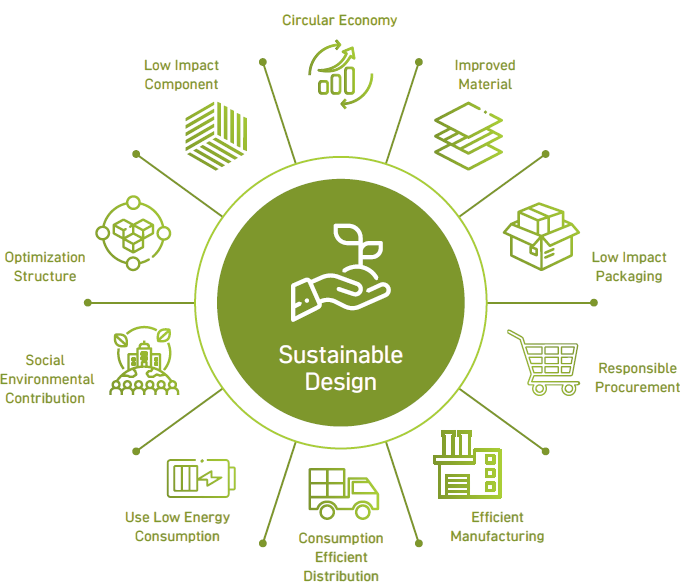
MERRY established a sustainable design framework in 2020, introduced the“Cradle to Cradleˮdesign philosophy in 2023, and will begin phased optimization of the 2025“MERRYʼs Product Circular Design Scoring Mechanismˮstarting in 2024.Integrate circular economy concepts into the product development process, striving to strictly control and minimize the environmental footprint of the product life cycle while pursuing exceptional product performance.
2025 Implementation of Product Lifecycle Management (PLM): Integration of carbon emissions calculation capabilities to establish the ability to rapidly assess carbon footprints at the raw material stage. Currently, thousands of parts and carbon coefficients have been consolidated achieving coverage of over 90% of the Groupʼs components, and enabling integration with relevant data from the SAP material management system. This functionality will deliver multi-level benefits :
- Providing more insightful data support for product design and manufacturing, further optimizing product design.
- During the New Product Introduction (NPI) phase, R&D teams can identify carbon emission hotspots in real time through product carbon emission calculations and multi-dimensional analysis.
- During the customer quotation phase, the sales team can provide preliminary carbon emission calculation results and offer customers analysis of product carbon reduction trends.
Sustainable Material Development and Carbon Reduction AchievementsTo reduce the environmental impact of virgin materials, MERRY has adopted a dual-track strategy of "actively introducing sustainable materials" and "increasing the proportion of recycled materials." Since 2022, we have engaged in in-depth collaboration with industry-leading suppliers to build a specialized database of sustainable materials. Through rigorous validation processes—including specification comparisons, software simulations, and physical prototyping—we ensure that green materials perfectly meet product performance requirements. Currently, this strategy has been implemented across our entire product line. By 2025, we have successfully incorporated sustainable materials into core product categories such as Headsets (HDT), True Wireless Earbuds (TWS), Microphones, Speaker Systems, and Battery Systems.
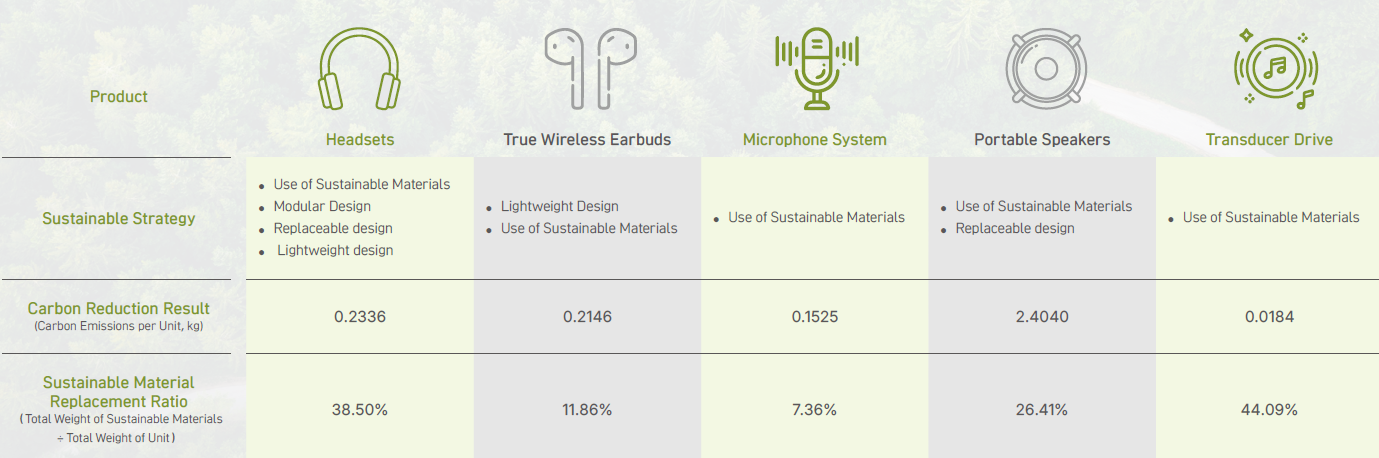
Other Key Achievements in Sustainable Design Improvements