



依據歐盟施行的個人資料保護法,我們致力於保護您的個人資料並提供您對個人資料的掌握。
按一下「全部接受」,代表您允許我們置放 Cookie 來提升您在本網站上的使用體驗、協助我們分析網站效能和使用狀況,以及讓我們投放相關聯的行銷內容。您可以在下方管理 Cookie 設定。 按一下「確認」即代表您同意採用目前的設定。

Creating Sustainable Sensory Experiences
MERRY Electronics Co., Ltd., guided by the vision of ' Creating sensory experiences to enhance well-being and sustainability,' collaborates with partners throughout the value chain, prioritizes stakeholder engagement, and is dedicated to ESG-driven sustainable development, with the mission of ‘Being a global leading solution provider in sensory technology’
01
Established the Sustainable Development and Nomination Committee
02
Referenced IFRS and GRI applying the principle of "Double Materiality"
Analysis & Identification
Materiality Analysis and Identification
MERRY conducts an annual sustainability materiality analysis and assessment. In 2025, the company continues to adopt the “Double Materialityˮ principle, based on“GRI 3: Materiality Guidance 2021,ˮ while also referencing IFRS and ESRS guidelines on sustainability impacts. Sustainability impacts are categorized into Impact Materiality and Financial Materiality. A six-step process is used to systematically identify sustainability impacts, encompassing external impacts—such as the companyʼs operational effects on society, the environment, stakeholders, and human rights— as well as internal financial impacts resulting from resource allocation to address these external impacts. The final sustainability impact analysis is derived by synthesizing the results of both internal and external impacts and serves as the basis for prioritizing sustainability reporting. For the 2025 fiscal year, sustainability targets for senior executives will be established based on the results of the materiality analysis.Upon approval by the President, these targets will be submitted to the Board of Directors and relevant functional committees for approval.
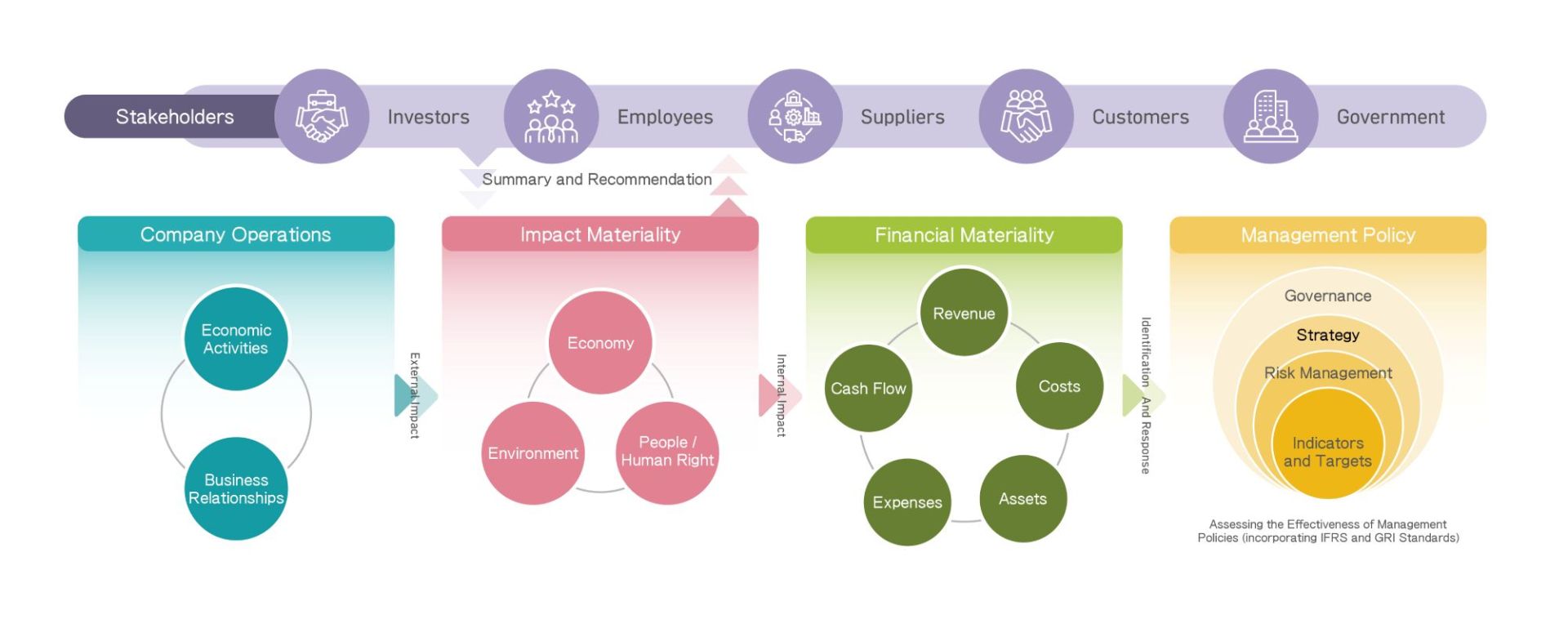
Explanation of Sustainable Impact Assessment
| 1 | Understand or organizational context |
Based on an overview of operational activities, and by comprehensively referencing sustainability reporting standards (GRI, SASB), international sustainability assessment indices (MSCI, S&P CSA, CDP), and best practices from peer companies, relevant sustainability issues and trends are collected and consolidated into 10 sustainability issues.
|
| 2 |
Identification of External Impacts |
A materiality assessment workshop was held, inviting core managers at the division director level or above from departments responsible for each issue to participate. For the 8 sustainability issues on the list, an in-depth analysis was conducted of MERRY's operating activities and business relationships across the value chain (including upstream suppliers, own operations, and downstream customers), examining the actual/potential and positive/negative impacts generated on the environment, society (including human rights), and other dimensions, in order to identify and prioritize impact materiality.
Impact materiality identification method Negative impacts materiality:Severity(scale、scope、remediability) X Likelihood Positive impact materiality:Severity(scale、scope)X Likelihood |
| 3 | Identification of Internal Impacts Financial materiality (Financial Materiality) |
Based on the materiality of the impacts across the eight sustainability topics, managers at the department head level or above in the finance department will further discuss the opportunities or risks arising from external factors affecting internal operations. They will identify and prioritize financial materiality by assessing the actual or potential direct/indirect short-, medium-, and long-term financial impacts.
Financial Materiality Identification Method Financial materiality:Operational impact magnitude X Likelihood |
| 4 | Management Guidelines Proposal | The results of the materiality assessments for sustainability issues and financial materiality are consolidated. The Strategic Planning Department then discusses and adjusts these findings based on future operational plans to ensure alignment between sustainability initiatives and operational strategies. This process completes the final identification and prioritization of sustainability issues. Subsequently, each responsible department develops policies, implementation plans,and targets for each issue based on the assessment results. |
| 5 | Determination of Material Sustainability Issues | The final results of the sustainability issue identification, along with the sustainability targets linked to senior executives’ compensation, were approved by the CEO, submitted to the Sustainability and Nominating Committee for approval, and subsequently presented to the Board of Directors for resolution on December 24, 2025. The Board confirmed that eight issues were designated as material issues. |
| 6 | Integration into Governance and Accountability | Based on the approved resolution, the Sustainability Task Force mapped the 14 GRI topics and the SASB “Technology and Communications” sector’s “Hardware” industry to serve as the basis for disclosures in this sustainability report. |
Impact Assessment Ranking and Matrix
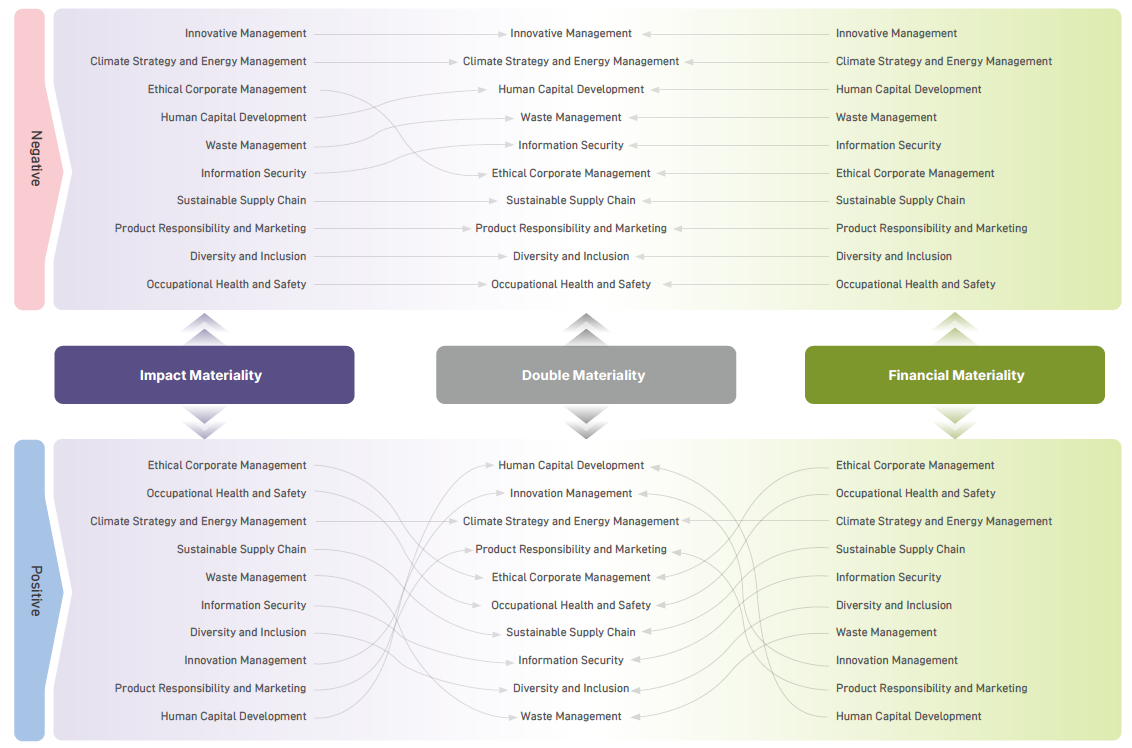
Double Materiality Matrix
We conducted impact analyses and prioritized the 10 sustainability topics based on both positive and negative impacts, selecting the top 5 topics from each category (totaling 7) as material topics. Additionally, considering MERRYʼs strategic goals for carbon reduction under Scope 3, “Sustainable Supply Chainˮ was also included as a material issue. After review and confirmation by the President, these 8 material issues were approved by the Board of Directors and designated as the priority reporting topics for this report.The 2025 sustainability impact assessment methodology has been refined, strategically narrowing the focus from 19 topics in the previous year to 10. Senior executives then conducted an in-depth analysis of the impacts on the companyʼs operations and external stakeholders to more precisely target priority issues. The 2025 list of eight material topics represents a reduction of three from the 11 topics in 2024. The company has identified “Innovation Management,ˮ“Climate Strategy and Energy Management,ˮ “Human Capital Development,ˮ and the newly added “Ethical Corporate Managementˮ as key priorities. Additionally, considering that MERRYʼs existing investment structure and tax management of global operations do not pose significant negative impacts, they have been excluded from the list of material issues.
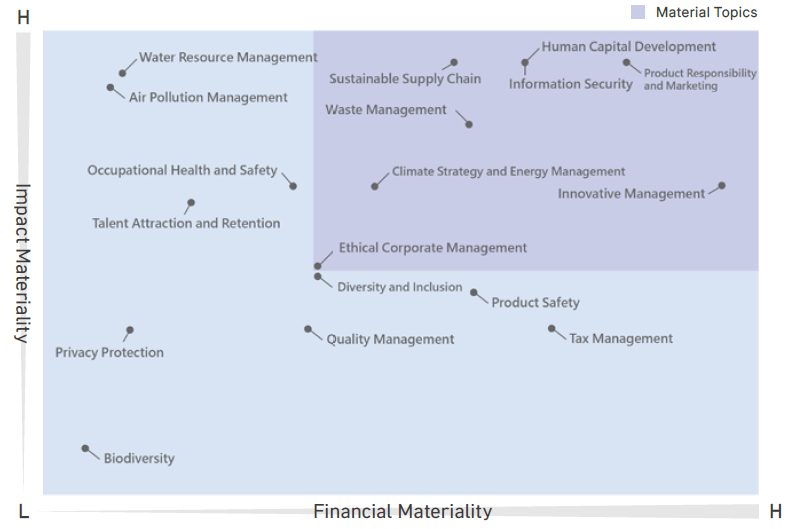
Key Impact Description
|
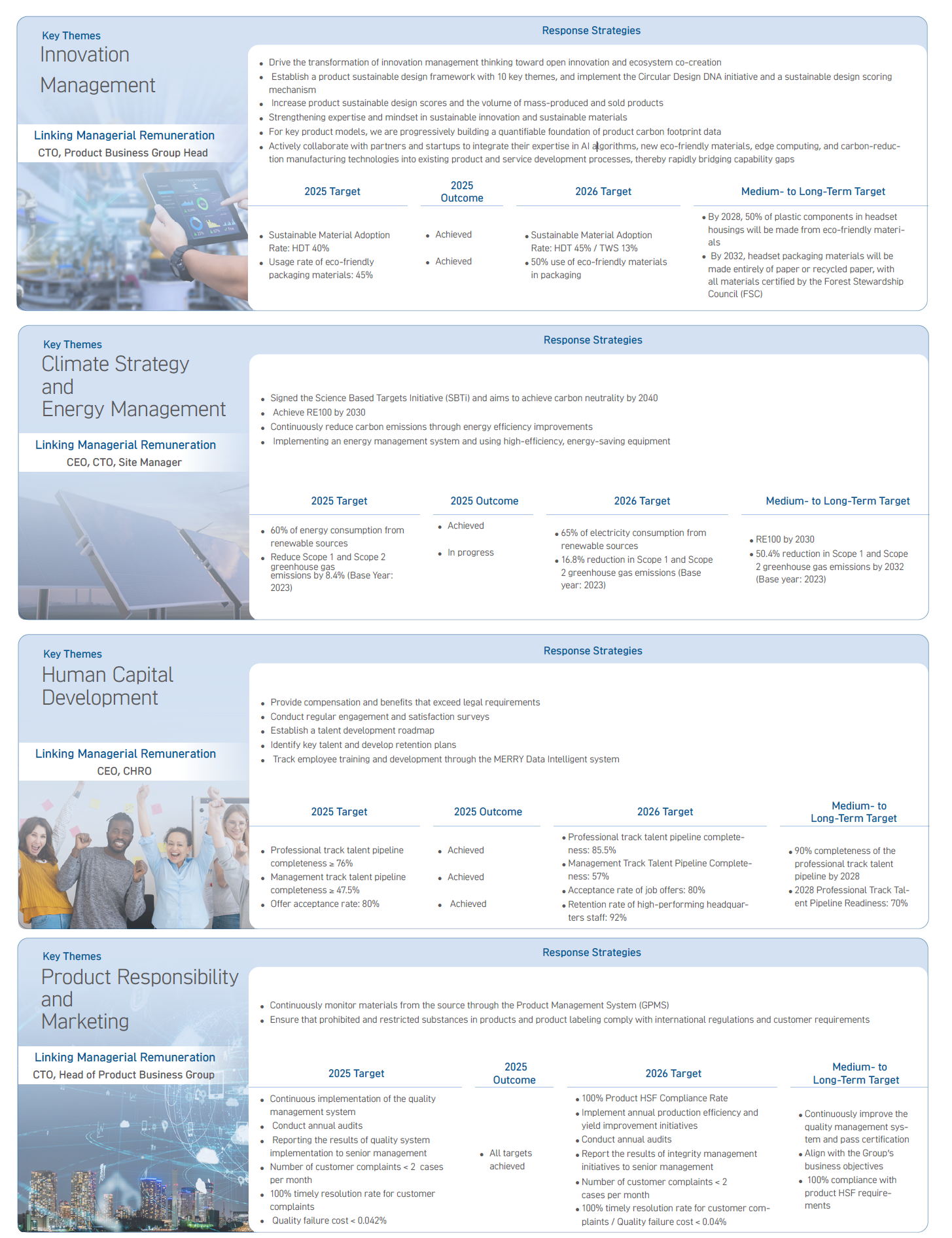
Innovation Management
|
Climate Strategy and Energy Management
|
Human Capital Development
|
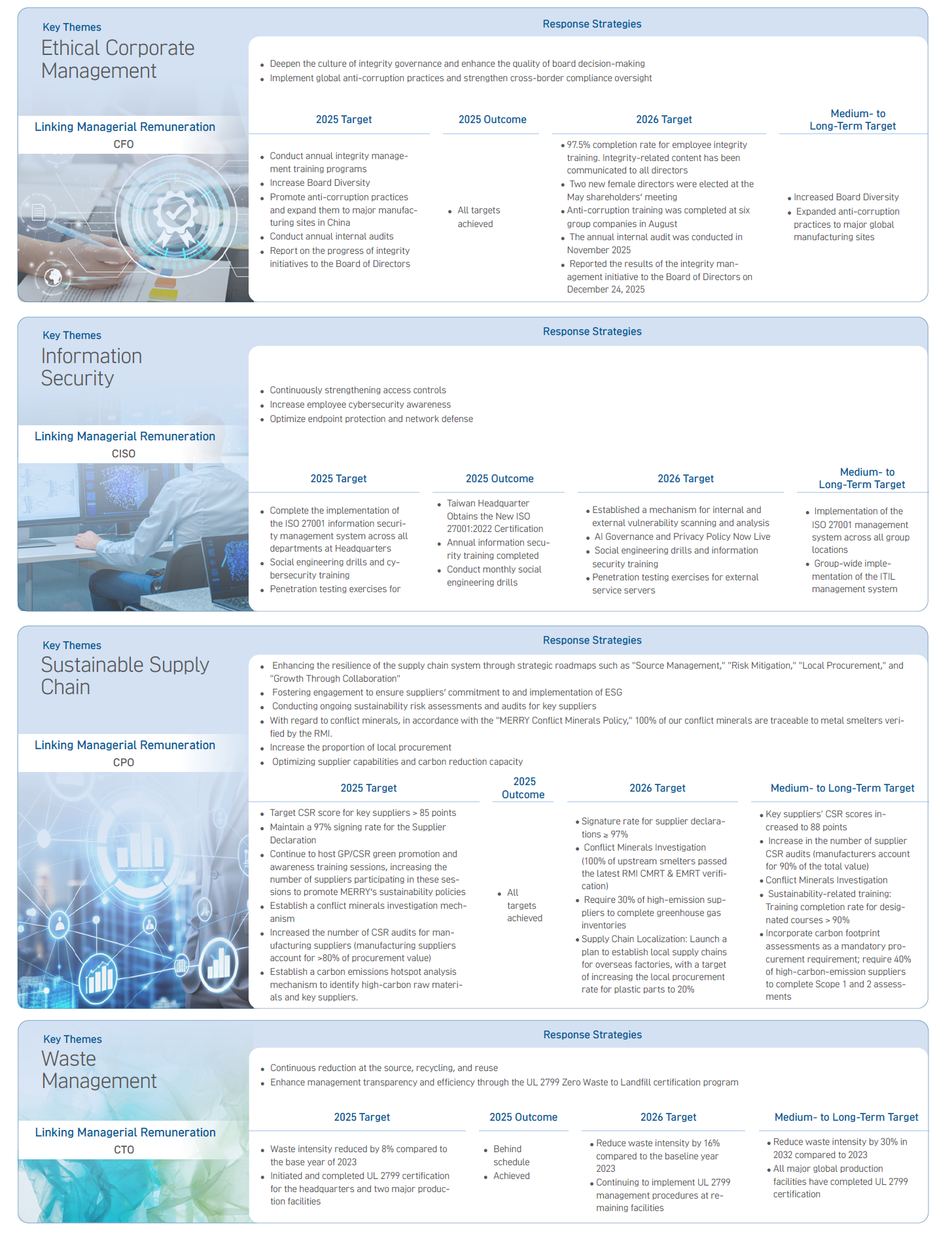
Integrity in Business Operations
|
| Global markets are placing increasingly higher demands on product functionality, quality, and safety standards.By proactively incorporating new concepts of sustainable design, we provide innovative product solutions and enhance product quality to meet customersʼ demands for green products. This also drives improvements in profitability and market positioning. Since these two issues are indirectly linked to economic impact and product quality, they are no longer listed as material issues for management. | As the global climate situation grows increasingly severe, regulatory authorities,customers, and the financial sector are placing greater emphasis on addressing climate change. MERRY continues to manage and respond to climate change risks in accordance with the IFRS S2 Climate Change Standard,committing to achieving RE100 by 2030.and in 2024, we announced our commitment to the Science Based Targets initiative (SBTi), which has been verified. We have set a specific target to reduce Scope 1 and 2 emissions by 50.4% by 2032. Over the next 10 years,we will continue to pursue this proactive carbon reduction goal through product innovation and operational improvements. | Human capital development is key to maintaining core competitiveness and organizational resilience amid rapid technological evolution. As human capital is the cornerstone of corporate competitiveness, MERRY fully recognizes the profound impact of AI development on the structure of the labor market. Through strategic human capital management, MERRY aims to enhance employee capabilities,satisfaction,and loyalty, as well as operational flexibility and innovation. |
MERRY regards corporate governance as the cornerstone of business operations,considers compliance in operational activities and products a prerequisite for commercial partnerships,and recognizes that non-compliance carries high-impact financial risks.Furthermore, in response to the ongoing environmental and social requirements of brand clients , MERRY has obtained compliance under internationally recognized standards through RBA and EcoVadis certifications. This not only mitigates the negative impacts of current operations but also attracts more potential clients while ensuring the stable growth of existing clients, thereby opening up new business opportunities and markets. |
Key Impact Description
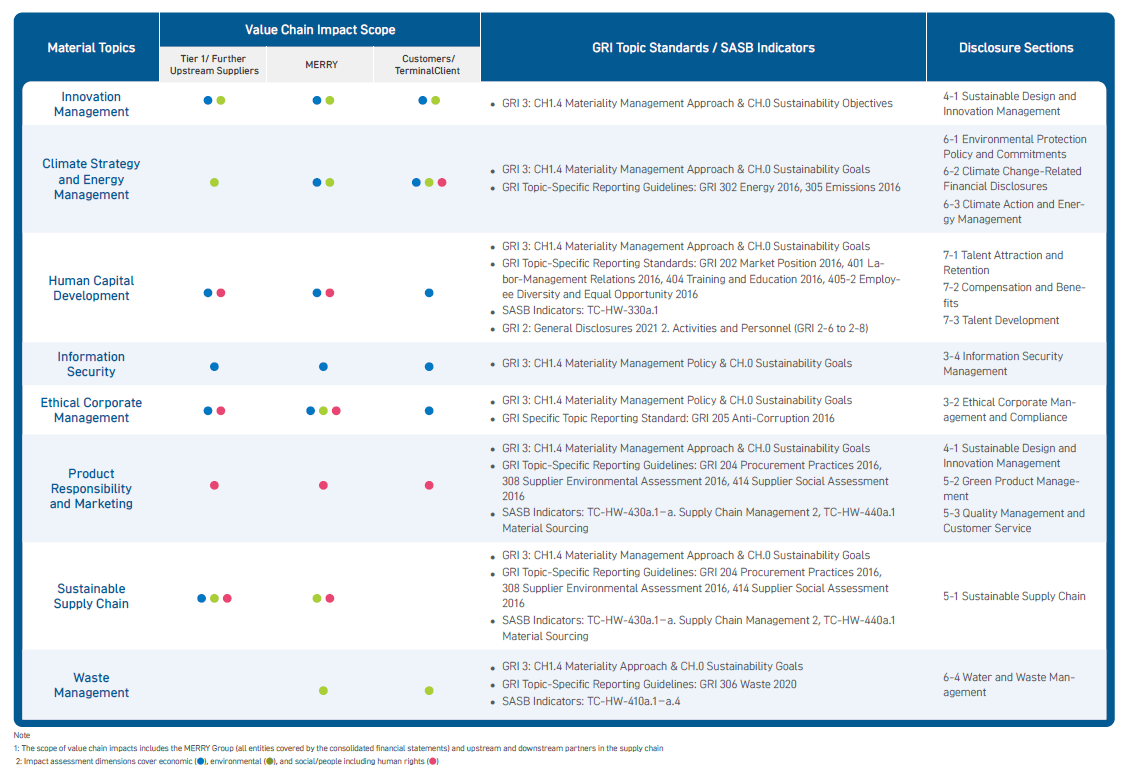
Description of Material Topic Impacts
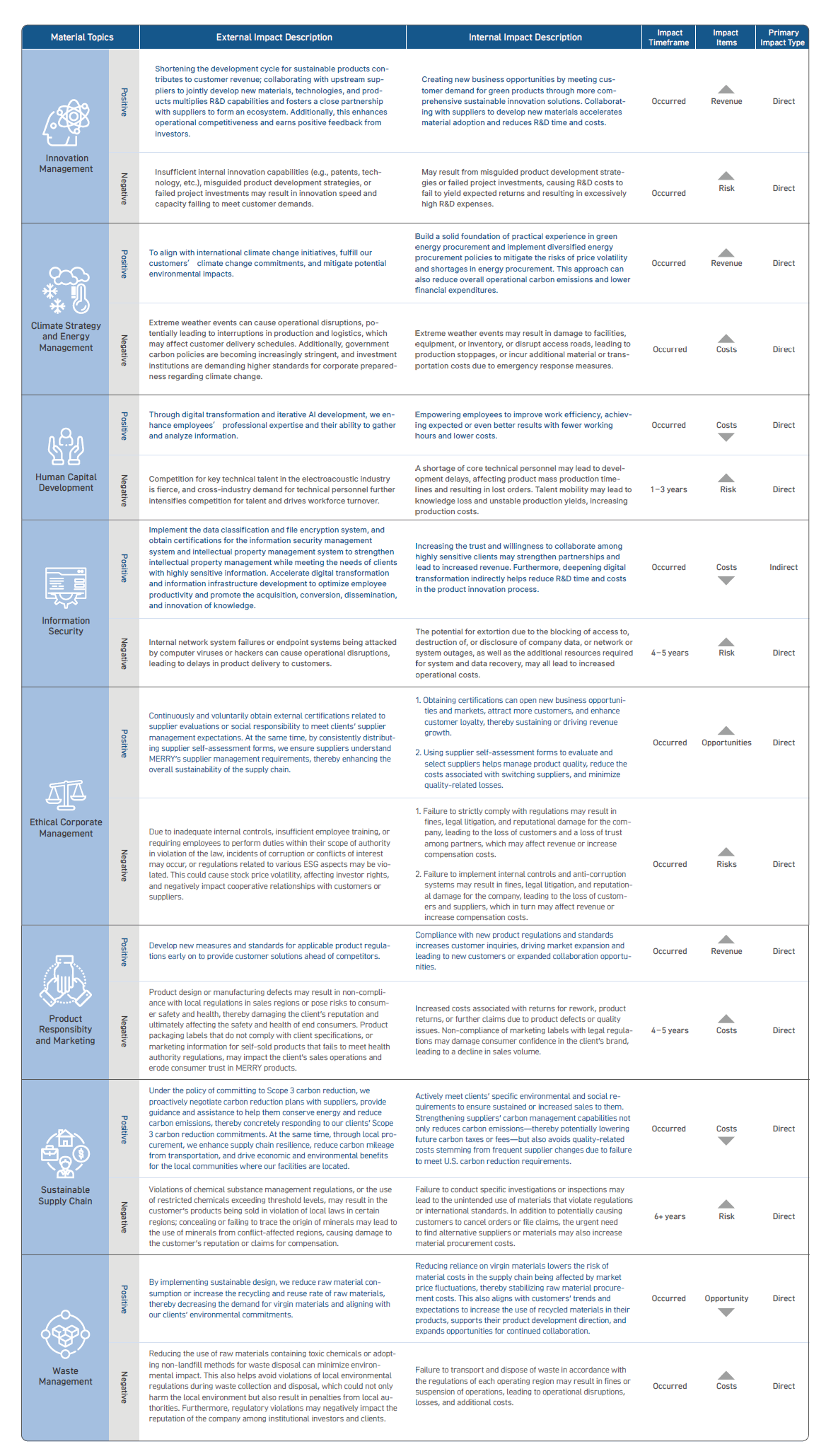
Strategic Alignment with Objectives